


Non Discriminatory Admissions Policy
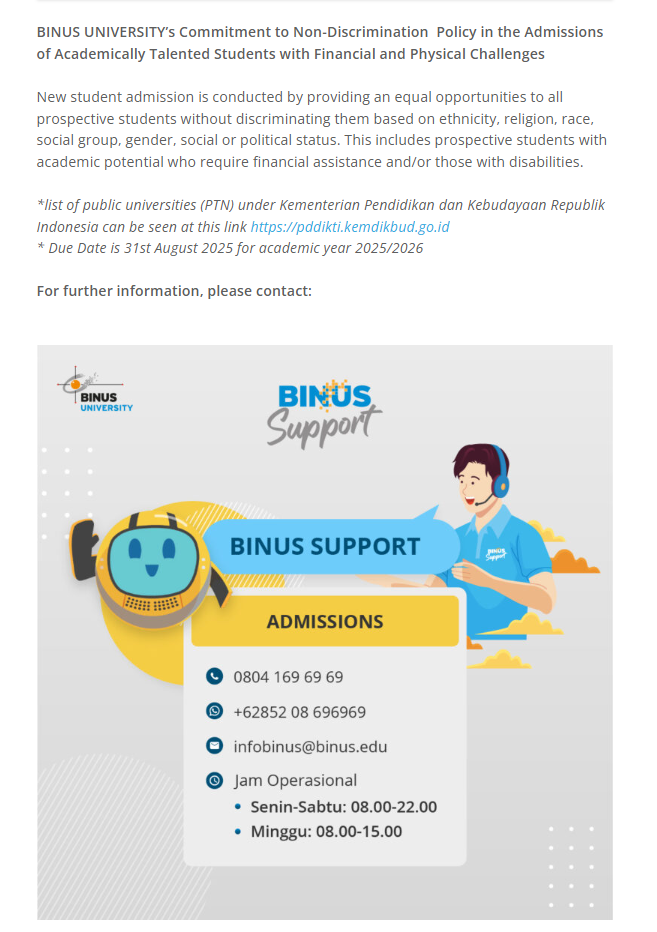
BINUS University implements a non-discriminatory admissions policy based on Rector’s Decree No. 044A (Chapter I, Article 2) regarding new student recruitment. Admission decisions are based on the academic knowledge and potential skills of prospective students, ensuring that the selection process focuses on their educational qualifications rather than discriminatory considerations. The university’s policy emphasizes equal educational opportunities for prospective students regardless of their religion, ethnicity, race, gender, social status, or disability.
The policy is publicly available through BINUS University’s official website, which outlines the university’s commitment to providing equal opportunities for prospective students from diverse backgrounds. The admissions process and its requirements are also communicated through the official admissions website, allowing applicants to access relevant information about admission procedures and requirements.
Furthermore, BINUS University supports equitable access to higher education by recognizing the needs of academically capable prospective students who face financial barriers or have disabilities. These considerations reflect the university’s commitment to inclusive education and its efforts to ensure that personal circumstances do not become unjustified barriers to pursuing higher education. Where targeted assistance is provided, such measures support the broader objective of reducing inequalities in access to educational opportunities.
The university’s commitment to non-discrimination is further reinforced by Rector’s Circular Letter No. 1677A/REK/IX/2023 concerning anti-discrimination and anti-violence measures on campus. This institutional commitment complements the admissions policy by promoting an inclusive and respectful educational environment.
Through its formally documented admissions policy, publicly accessible admissions information, and institutional commitment to preventing discrimination, BINUS University demonstrates its commitment to fair admissions and equal educational opportunities for prospective students.